Behind The Coin: Sei Network

A dummy's guide to the Sei Network
DeFi’s Rise
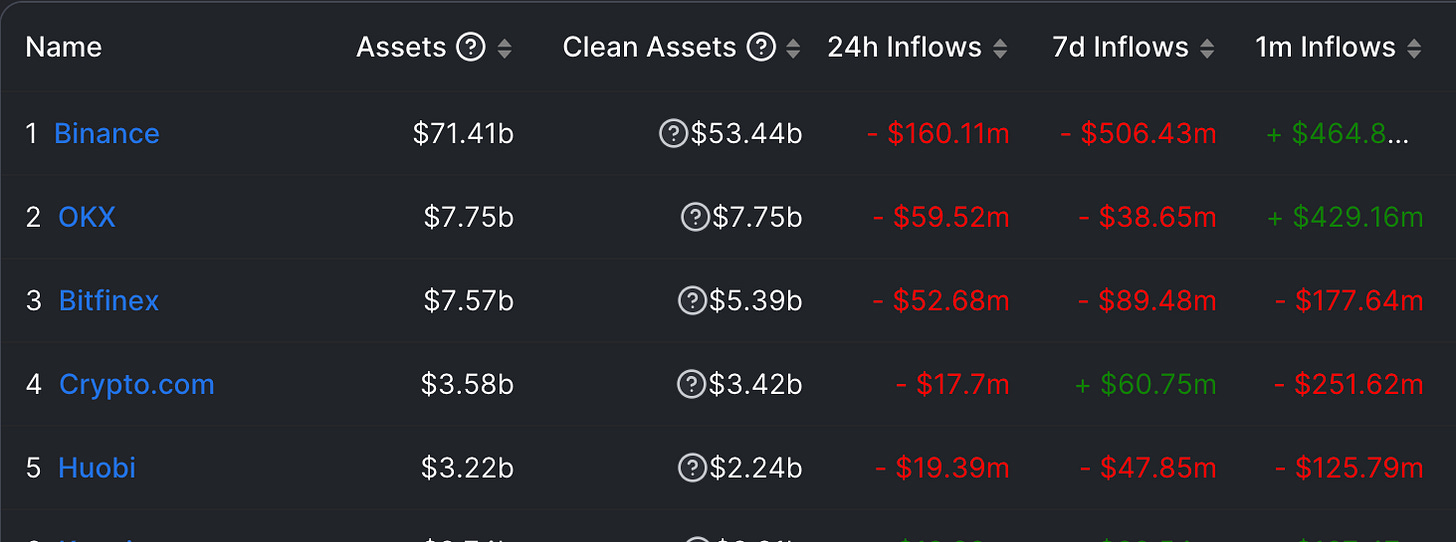
From what it seems, DeFi has been on the rise ever since the fall of these CEX giants. With exchanges such as Curve, PancakeSwap and Uniswap making huge advancements to their platforms, it's very clear that consumer attraction to Decentralized Finance Protocols has drastically increased.
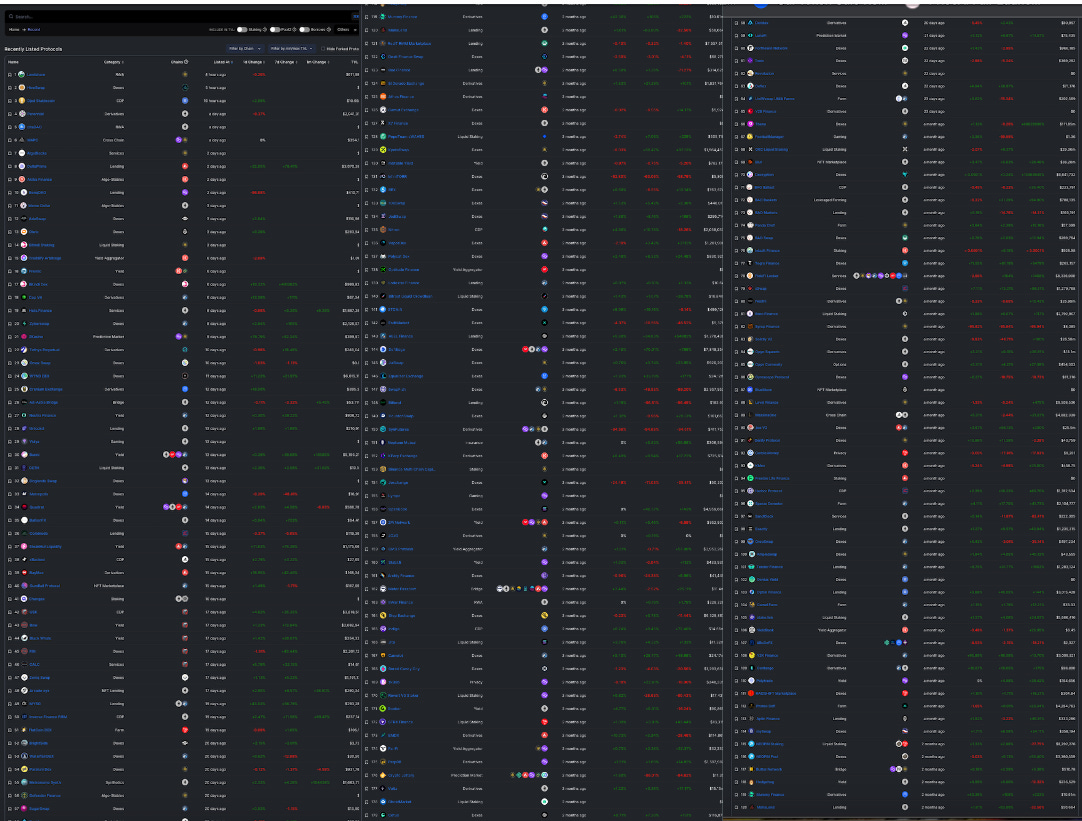
However, one major problem with this sudden uprising has been its dilution and lack of centrality. In fact, over the past two months there's been the emergence of 178 DeFi Protocols, as recognized by DefiLlama; yet, these protocols have been spread out over dozens and dozens of different L1’s, L2’s, rollups, etc…
As it stands currently, not many existing blockchains are suited to running DeFi Apps. Clunky, costly and complex, general purpose chains just aren’t tailored for these types of applications. Due to this issue, we’ve seen protocols flock to every Layer 2, rollup and fork under the sun.
And while it may seem like the implementation of Layers 2’s such as Arbitrum, zK Sync and Optimism have solved the problem; they’re only really delaying the inevitable as these chains ultimately rely on L1’s that aren’t suited for this purpose.
DeFi’s Trump Card: Sei
This is where SEI comes in. Sei is a first-of-its kind sector-specific blockchain built to run DeFi Apps, Protocols, DEXes, etc… An orderbook Layer 1 built using Cosmos SDK and Tenderint core. Diverging from common use, general purpose chains such as Ethereum, Solana, and Aptos; Sei is strictly for DeFi and DeFi only.
Utilizing a horizontal scaling solution, Tenderint core and Cosmos SDK, Sei boasts some pretty impressive stats. With 850K+ users on their testnet, Sei has transaction speed and finality time that rivals to no currently existing L1 blockchain.

What Makes Sei So Efficient?
Sei comes pre-packed with some of the best technological blockchain advancements currently out. Listed below are some of the chain's most prominent features/attributes.
Native order matching engine
The heart of exchanges, centralized and decentralized. Order matching engines are algorithms that match bid orders with ask orders, enabling users to buy, sell and trade securities in alignment with market prices. On general purpose chains, such as Ethereum, DEX developers usually have to code an order matching system on top of Eth’s EVM system, but with SEI this is no longer needed. With this native engine built into SEI’s code, developers can deploy their own CLOB’s onto SEI’s blockchain within two transactions.
Twin-turbo consensus - Utilizing a combination of Intelligent Blockchain Propagation and Optimistic Block Processing, SEI is able to sustain 22,000 ops Transactional Throughput. Excelling past Solana, Ethereum and Bitcoin, whose respective Transactional Throughputs are 10,000, 20 and 10.
Intelligent Blockchain Propagation: Intelligent blockchain propagation is the use of artificial intelligence (AI) to make the process of sharing information on a blockchain network more efficient. By using AI techniques such as machine learning, the blockchain can predict which nodes are most likely to receive and validate new information and prioritize how information is shared. This can help the blockchain network process transactions faster, work better, and be more effective.
Optimistic Block Processing: Validators propose and agree on a block to commit. After they agree on the block, they process each transaction and update the state. This process can be slow if theres an abundance of data to go through. With Optimistic Block Processing, validators can start processing the state changes optimistically based on the proposed block they received, assuming that it will be accepted. They apply these changes to a temporary candidate state. If the proposed block is accepted, the candidate state becomes the new state. If it is not accepted, the candidate state is discarded.
Two Kings and Their Knights
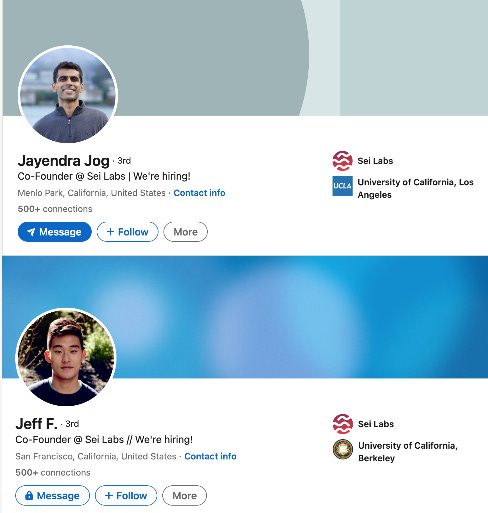
Jayendra Jog
This smart man is one of the two heads controlling the body of Sei-Labs. A magician with code, Mr. Jog formerly worked at Robin Hood as an engineer, working, and leading an assortment of cryptocurrency-related projects for the firm; proving that he is no stranger to cryptocurrency finance and is more than qualified for his position. Mr. Jog also went to the University of California, Los Angeles, where he graduated with a bachelors in computer science.
Jeffrey Feng
Previously a Goldman Sachs investment banker and graduate from the University of California, Berkeley, Mr. Fengs is Sei’s other head. More of a businessman, Mr. Feng’s previous experience and occupations shows that he is very qualified and experienced in the fields of cryptocurrency investments and entrepreneurship.
Supporting this deadly team of two are some of the most prestigious Venture Capital firms in Crypto. With the help of Multicoin Capital, Coinbase Ventures, Delphi Digital, GSR, Tangent, etc. Sei has been able to raise a hefty sum of money. 5 million generated in one of their first investment rounds, which was hosted by Multicoin Capital. And 50 million for an ecosystem and liquidity fund that Sei will use to incentivize people to build on their blockchain pre-mainnet.
Loyal Subjects
With Sei’s testnet going live July 11th, 2022, the chain has already seen major success. Over 100+ apps have begun partnering and building pre-mainnet. Of all the apps that have integrated, here's a small list of my favorites!
Vortex Protocol
Vortex Protocol is a decentralized derivatives exchange for IBC chains built on the Sei Network. Vortex offers many of the same features that centralized exchanges provide (borrow lending, cross-collateral, and cross-margining) but as a permissionless and decentralized protocol.
Utorg
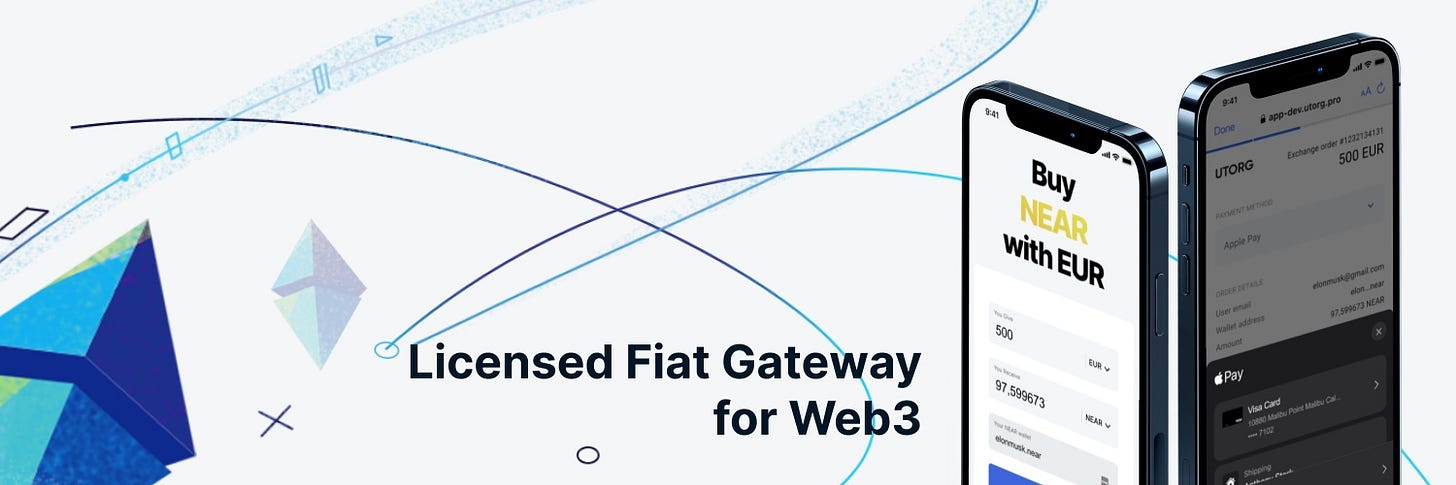
Utorg is a fiat-to-crypto payment widget enabling people in 187 countries to buy crypto using 10+ payment methods.
Skip Protocol
Skip Select is a blockspace auction system that allows searchers to capture MEV in the Cosmos ecosystem, across a variety of chains, and for validators, stakers, and searchers to share in the rewards.

Conclusion
As more time passes, it becomes more apparent that Decentralized Finance will be a major industry in the near/long term future. With more and more users straying away from Centralized Financial Apps such as Binance, Robinhood and Coinbase, its no surprise who will win in the CeFi vs. DeFi war.
However, one major problem DeFi currently possesses is a lack of centrality. General purpose chains such as Ethereum, Arbitrum and BSC, which hold a vast majority of DeFi applications, just aren’t tailored to run these kinds of applications. Because of this, we’ve seen DeFi apps sprawl towards every layer 2 known to man in hopes of finding a more cost-friendly, scalable environment to build on. While we have seen this bring in some sort of success, in the grand scheme of things, this is only a short term solution as these layer 2’s ultimately rely on clunky layer 1’s, which constrains them to a finite degree in terms of many things.
The long term solution is apparent. Sei Network: a first-of-a kind sector specific layer 1 built to run DeFi. With technological advances like no other, Sei’s enhancements, attributes and innovations place it far ahead of its general purpose competitors in almost every single quantifiable metric. Backed by an amazing team and a plethora of bright VC firms, this network has already started its journey to become the king of DeFi. Now the real question stands, will you join its emerging kingdom or watch from the sidelines as it makes history?